



How to Start a Jewelry & Accessories Business From Home in 2026 (Low Budget Guide)
From Bedroom to Brand: How to Start a Jewelry Business From Home (Even on a Small Budget)
Ever find yourself scrolling through Pinterest for hours, thinking "I could totally make this"? Or maybe you've already got a drawer full of earrings and accessories, and deep down you know it's more than just a hobby. If that's you, this guide is for you.
A jewelry and accessories business is one of the few ideas that can take you from "someone who loves pretty things" to "brand owner" without needing a huge budget, a storefront, or even leaving your house. All you need is a plan — not just enthusiasm. So let's build that plan together.
Why Jewelry, Specifically?
Not every business idea is easy to start from scratch. But jewelry has a few advantages that don't come around often:
- You can start with a genuinely small budget — no need to save up for years.
- Demand is steady year-round, with real spikes around holidays, weddings, and Valentine's Day.
- When people love what you make, they tell their friends — free marketing, basically.
- The profit margins? Pretty solid, especially if your pieces are handmade or uniquely designed.
Convinced yet? Let's go step by step.
Step One: Know Exactly What You're Selling
Before you buy a single bead, ask yourself:
- What do you actually love working with? Silver, gold-plated pieces, crystals, or fully handmade designs?
- Who's your ideal customer? Young women in their 20s, brides, or a specific style niche?
- What makes someone buy from you instead of scrolling past to the next jewelry page?
The biggest mistake beginners make is trying to sell to everyone. Pick one lane and own it.
Step Two: How Much Money Do You Actually Need?
People tend to fall into one of two traps here: starting without doing any math and getting blindsided later, or waiting forever for "enough capital" and never starting at all. The fix is in the middle — calculate smart, start small.
| What you'll spend on | Notes that matter |
|---|---|
| First batch of products or materials | Start small, test the market before scaling up |
| Packaging (boxes, bags, cards) | This is part of the feeling you're selling — don't skimp on it |
| Photography | A decent phone camera + natural light is plenty at first |
| Ad budget | Even a few dollars a day is enough to start testing |
| Initial shipping costs | Consider whether free shipping makes sense as a launch offer |
One golden rule: from day one, keep your business money separate from your personal money. Open a separate digital wallet, or even just use a separate envelope. Future-you will thank present-you when it's time to figure out "did I actually make a profit?"
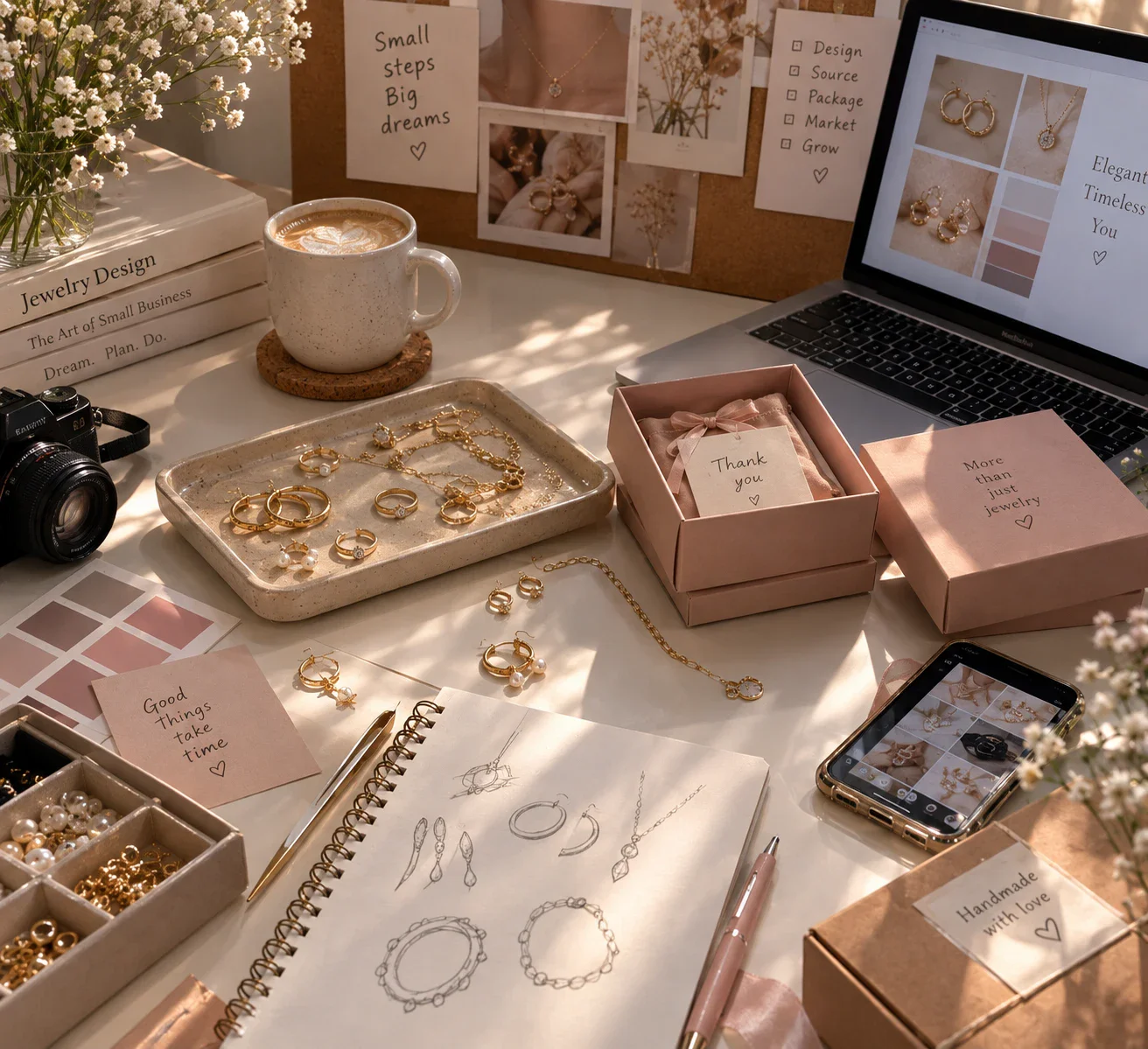
Pricing: Where Most Beginners Talk Themselves Into a Bad Decision
Price too low to "attract customers" and you'll end up losing money. Price too high because "my work is worth it" and people will scroll right past. Here's the simple formula:
Price = (Material cost + Packaging + A share of your marketing budget) + A profit margin that actually makes it worth your time
One thing people often forget: your time has value. If a piece takes you two hours to make by hand, those two hours aren't a gift to the customer — they're part of the cost.
Where Do You Actually Get Your Products?
You've got three main paths:
- Buy wholesale from suppliers — the fastest way to get started.
- Make it yourself, which gives you a style nobody else in the market has.
- Import, but save this for later, once you've confirmed people are actually buying.
Start small, test with more than one supplier, and see who gives you the best mix of quality, price, and reliability.
Your Brand Isn't Just a Product — It's a Feeling
- Pick a name that's short, easy to say, and available on social media.
- Your logo and colors don't need a big budget — plenty of young designers charge very reasonable rates.
- Packaging and photos are what make someone stop scrolling on Instagram or TikTok in the first place.
Marketing: This Is Where the Business Actually Gets Made or Broken
Instagram and TikTok Are Your Second Home
Jewelry is a visual product — social media isn't optional, it's the foundation. Use Reels to show your pieces actually being worn, not just laid out on a table.
Small, Smart Ads
Start with a modest daily budget, test a few different ads, and track which ones actually drive sales — not just likes.
Team Up With Micro-Influencers
You don't need someone with a million followers. Someone with 5,000 genuinely engaged followers who trust her recommendations will often bring you more real sales, at a fraction of the cost.
Now What? Managing the Money You've Made
- Set aside a portion of every sale to reinvest in new inventory.
- Don't pull out all your profit in the first couple of months — let the business grow first.
- Track which products are actually selling and double down on those; drop the ones that aren't moving.
Mistakes That Will Save You a Lot of Headache If You Avoid Them
- Buying too much inventory before confirming there's real demand.
- Underestimating the importance of good photos and content.
- Mixing business money with personal money.
- Pricing based on gut feeling instead of actual cost calculations.
- Quitting on marketing the moment sales slow down, instead of asking why.
Bottom Line
Starting a jewelry business from home isn't a distant dream — it's a series of small, deliberate decisions: know your niche, get your numbers right, price smartly, and market consistently. Success here isn't just about how beautiful your pieces are — it's about how well you manage the money behind them from day one.
please login to be able to comment